
Insurance Claims Outsourcing: Complete Guide 2025

Did you know that around 38.7% of insurance companies worldwide are now outsourcing at least part of their claims processing? The reason is simple: handling claims in-house is time-consuming, costly, and full of repetitive tasks that slow down service delivery.
That’s where insurance claims outsourcing comes in. By the use of outsourcing to specialized providers, insurance companies can not only speed up the process of claims but also cut down on the mistakes, and give their policyholders a good and easy experience of going through their claims, as well as reducing their operational costs at the same time.
In this blog, we’ll explore what claims outsourcing really means and how to choose the right outsourcing partner. So, if you ever thought about how insurers manage to process hundreds or even thousands of claims efficiently every day, you’re about to find out.
What Is Insurance Claims Outsourcing?
Insurance claims outsourcing is a situation where insurance companies engage third-party service providers to perform not only some tasks but the whole claims process, including documentation, verification, settlement, and customer support.
Insurers decide to hand over the responsibility of the complete management of the claim process to a group of qualified and competent professionals, rather than conduct the operation in-house.These outsourcing partners have trained professionals, advanced software, and well-defined processes to handle claims efficiently and accurately.
For insurers, this partnership can be a game-changer. It allows them to focus more on their customers and core operations while ensuring that every claim is processed quickly, correctly, and in line with industry standards.
Types of Insurance Claims
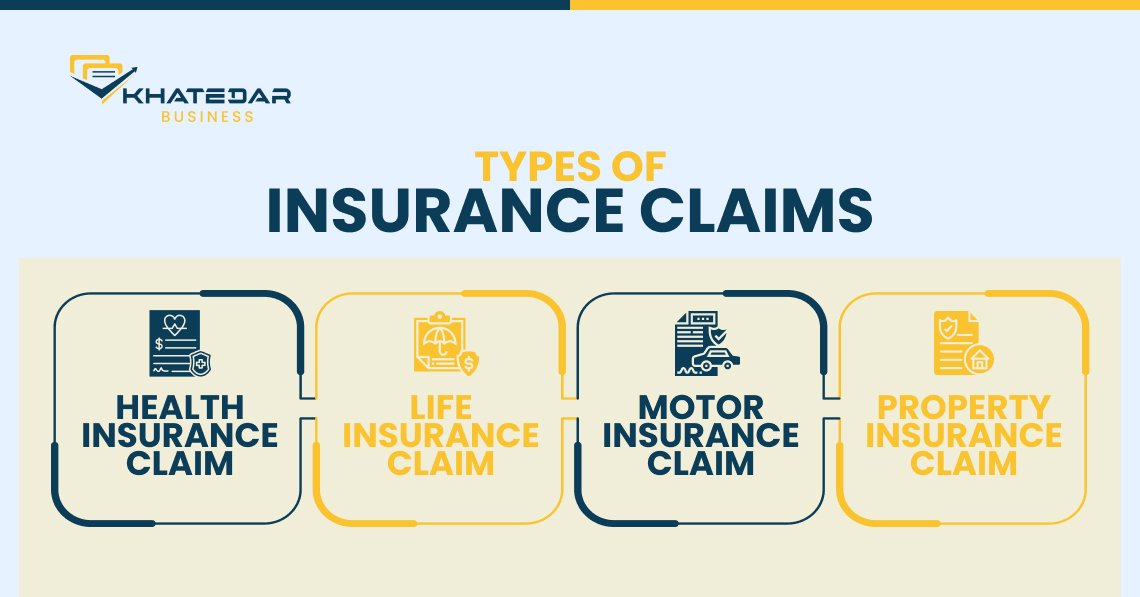
Not all insurance claims are the same, and that’s exactly why outsourcing can make a difference. Different types of claims need different knowledge, different documentation, and different steps for processing. Let’s look at the main types of insurance claims that companies outsource:
1. Health Insurance Claims
Health insurance claims include medical expenses such as hospital bills, surgeries, and treatments. The process of these claims demands precision and observance of medical coding standards. The use of outsourcing allows the insurers to deal with a large number of cases in a short period of time, thus they can save themselves from having a lot of work, errors, and they can also make the paybacks to hospitals and patients faster.
2. Life Insurance Claims
Life insurance claims are sensitive and require careful verification of policy details and supporting documents like death certificates and beneficiary information. Outsourcing makes certain that these claims are handled not only accurately but also with compassion and understanding, which is very important in establishing and keeping good relationships between the insurers and the deceased families.
3. Motor Insurance Claims
Motor insurance claims are for cases when the vehicle has been damaged, stolen, or involved in an accident. In these claims, apart from the customers, garages, and surveyors, as well as the police, are involved. Outsourcing partners streamline the process by managing documentation, assessments, and coordination, ensuring faster settlement and happier customers.
4. Property Insurance Claims
Property claims include damages from fire, floods, natural disasters, or theft. These are usually complicated and take a lot of time. Outsourcing firms have the necessary skills, equipment, and staff to not only examine these types of claims but also to verify them quickly, thus they talk about fewer claims and delay issues, and the accuracy of claims is elevated.
Benefits of Outsourcing Insurance Claim Processing Services
Let’s explore the key benefits that make outsourcing such a smart move for insurance companies:
1. Cost Reduction
Maintaining an in-house claims department can be expensive, with salaries, training, infrastructure, and technology all adding up. Outsourcing helps cut these costs significantly by using external expertise at a lower operational expense. You only pay for the services you need, when you need them.
2. Improved Efficiency and Speed
Outsourcing partners have the tools, technology, and skilled staff to process claims faster and more accurately. With streamlined workflows and automation, insurers can reduce turnaround times, eliminate backlogs, and deliver quick resolutions to their customers.
3. Enhanced Customer Satisfaction
It is obvious that customers appreciate the quick and transparent handling of their claims. Faster settlements and clear communication lead to higher trust and better customer retention. Outsourcing ensures policyholders get the attention and service they expect, without long delays or confusion.
4. Access to Expertise and Technology
Outsourcing companies specialize in claims processing. They bring advanced analytics, AI tools, and automation to improve decision-making and accuracy. Insurers benefit from this expertise without having to invest heavily in new systems or continuous staff training.
5. Focus on Core Business
By outsourcing time-consuming claims processes, insurers can redirect their focus toward what truly matters- designing better products, strengthening customer relationships, and growing their business. This improves both efficiency and competitiveness.
6. Better Compliance
Insurance is a highly regulated industry, and compliance errors can be costly. Outsourcing partners are well-versed in legal and industry standards, ensuring that every claim is handled according to the latest rules and data protection norms. This minimizes risk and improves regulatory confidence.
How to Look for the Right Insurance Outsourcing Company?
Choosing the right outsourcing partner can make or break your claims process. Here’s how you can make the right choice:
1. Define Your Needs and Goals
Firstly, figure out which steps of the claims process you think are most suitable for handing over; for example, verification of claims, performing data entry, creating documentation, or even processing full-cycle. Also, decide what exactly you want to achieve by this; it could be faster turnaround, better accuracy, cost reduction, or simply all. Having defined goals helps you choose a partner who can meet your specific needs.
2. Evaluate Potential Partners
You can ascertain the best outsourcing providers only after you have them on your shortlist. To do this, you should compare each one of them based on their experience, reputation, the technology they embrace, and their level of scalability. Do not refrain from requesting to examine their case studies or clients’ references so that you can confirm their achievements in practice.
3. Conduct Due Diligence
The step of deciding on a partner must be preceded by an extensive background check of that potential partner. Look at how they secure customer data, the certificates they get to prove they are compliant, and their quality assurance measures, and so on. It’s important to ensure that your outsourcing partner follows strict confidentiality standards and complies with regulations like HIPAA or GDPR, depending on your region.
Final Thoughts
The question of whether to outsource claims management is being efficiently resolved in the insurance industry, which is the most important aspect of their business. A win for the insurance companies is to work with reliable outsourcing providers in order to make the claim processes less complicated, minimize expenses, and offer their customers the quickest and most accurate results.
Outsourcing doesn’t replace your internal team; it enhances it. This gives insurers the freedom to work on innovation, customer relationships, and growth while the experts take care of the heavy lifting in the background. What is the outcome? Higher quality of service, more satisfied customers, and a stronger business.
Would you like to simplify your operations, increase your claims department efficiency, or even venture into healthcare processes? If so, Khatedar Business is the right partner providing Insurance Outsourcing Services and Healthcare Outsourcing Services tailored to your business needs.
Stay connected, we’ll keep sharing useful insights and trends to help you stay ahead in the world of insurance outsourcing.
FAQs
Q- How to choose the right outsourcing partner?
A- Start by defining your business goals, then look for a partner with proven industry experience, strong data security, and reliable client feedback. Always evaluate their technology, flexibility, and communication style before finalizing.
Q- How to choose the best insurance company?
A- Choose an insurer with a good reputation, transparent policies, and strong customer support. Compare their claim settlement ratio, premium rates, and coverage options before making your decision.
Q- What to look for in an insurance company?
A- Look for credibility, financial stability, and a history of timely claim settlements. A good insurance company also prioritizes clear communication and customer satisfaction.
Q- Do insurance companies outsource claims?
A- Yes, many insurance companies outsource parts of their claims process to specialized service providers. This helps them improve efficiency, reduce costs, and speed up settlements.
Q- What is insurance outsourcing?
A- Insurance outsourcing means delegating specific tasks, like claims processing, policy management, or customer support, to third-party experts. It helps insurers save time, cut costs, and focus on core operations.
Q- What are the three types of outsourcing?
A- The main types are onshore outsourcing (within the same country), nearshore outsourcing (to nearby countries), and offshore outsourcing (to distant countries offering cost advantages).
Q- What are the 4 stages of insurance claims?
A- The four main stages are claim reporting, verification and assessment, settlement, and closure. Each step ensures the claim is handled accurately, fairly, and efficiently.