
Payroll Service Charges in India: 2026 Pricing Guide
Did you know that many businesses overpay for payroll services simply because they don’t know the standard pricing?
You can’t avoid payroll if you are running a business. Everything from wages, pay slips, taxes, and compliance has to be flawless and delivered timely. So, the issue is, how much should payroll services cost you every month?
You might think- am I paying too much, or am I compromising on quality by paying less? That is why it is important to understand payroll pricing.
In this blog, we’ll break down what accountants charge for payroll services in India and how you can choose what works best for you.
How Much Do Accountants Charge In India For Payroll Services Per Month?
Payroll pricing in India is not fixed. It depends on the size of your business, the size of the workforce, and the level of assistance you require.
Pricing Models
Flat monthly retainer
This is used by small businesses. You pay an agreed amount each month between ₹1,000 to ₹12,000 for around 10 to 25 employees. It covers basic payroll functions, salary calculations, and payslips.
Per employee pricing (PEPM – Per Employee Per Month)
You pay an amount depending on the number of employees, between ₹150 to ₹1,000 per employee per month, with this model. For startups and growing businesses, the range is commonly ₹300 to ₹800 per employee.
Add-on charges
Some services are not always included in the base price.
For example:
- PF & ESI compliance
- TDS calculations and filings
These can cost an additional ₹1,000 to ₹6,000 per month, depending on complexity.
Cost by Business Size
Here’s a simple breakdown to help you understand what you might pay based on your team size:
Business Size | Monthly Range (Total) | Per Employee Cost | Notes |
10 employees | ₹3,000 – ₹12,000 | ₹300 – ₹1,200 | Basic salary processing & payslips |
25–50 employees | ₹5,000 – ₹50,000 | ₹200 – ₹1,000 | Includes deductions like PF, ESI |
100+ employees | ₹15,000 – ₹1,00,000+ | ₹150 – ₹500 | Full payroll + compliance support |
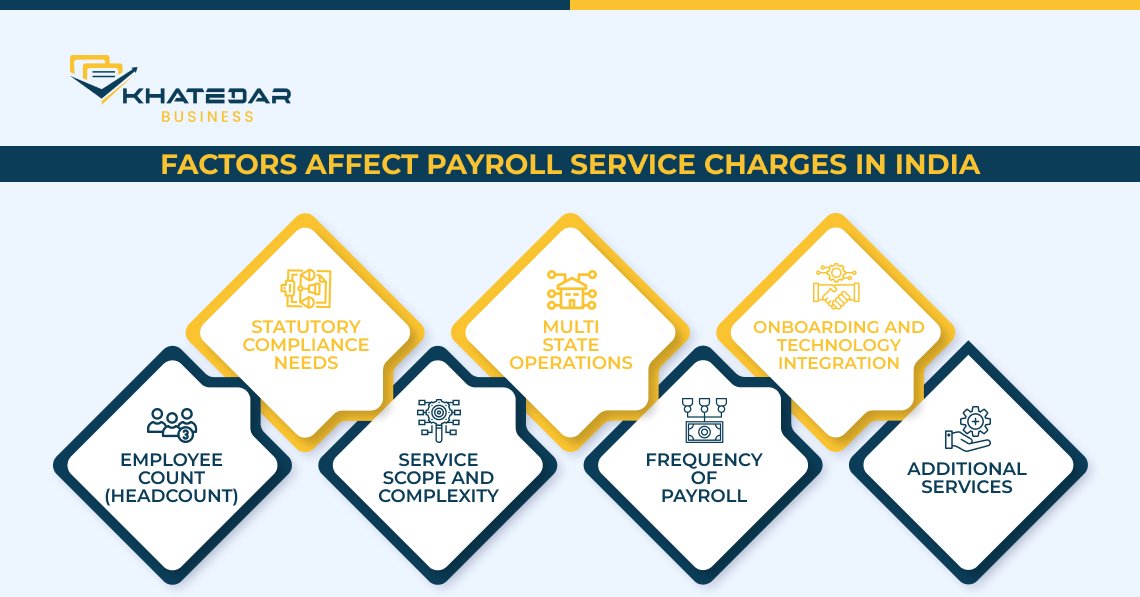
What Factors Affect Payroll Service Charges in India?
You’ve seen the pricing ranges, but what decides how much you’ll pay? Let’s simplify it so that you can easily understand the breakdown of your expenditure.
Employee Count (Headcount)
The higher your employee count is, the more your payroll company will have to do. More employees mean more salary calculations, payslips, records, and compliance tracking. That is the reason why many payroll providers charge per employee.
Statutory Compliance Needs
If your payroll includes PF, ESI, TDS, and other legal filings, it will lead to an increase in charges. These aspects demand accuracy, regular updating, and timely submission to avoid any penalties.
Service Scope and Complexity
Basic payroll is about salary processing and payslips, but when you add bonuses, incentives, reimbursements, different types of pay, etc., the level of complexity rises and so do the charges.
Multi-State Operations
If your company operates in a few states, the compliance work gets more complex. Each state has its own set of rules and regulations that require additional effort and thus, higher pricing.
Frequency of Payroll
Monthly payroll is standard and more cost-effective. But if you need weekly or bi-weekly payroll, it increases workload and pricing.
Onboarding and Technology Integration
Setting up payroll systems, employee data, and integrating software takes time and effort in the beginning. Some providers may charge extra for this setup or include it in the overall pricing.
Additional Services
Assistance with additional features like reporting, audits, employee support, tax planning, or HR efforts will contribute to the overall charges. Usually, these are optional but can prove useful as your business expands.
How Do Accountants Price Payroll Services?
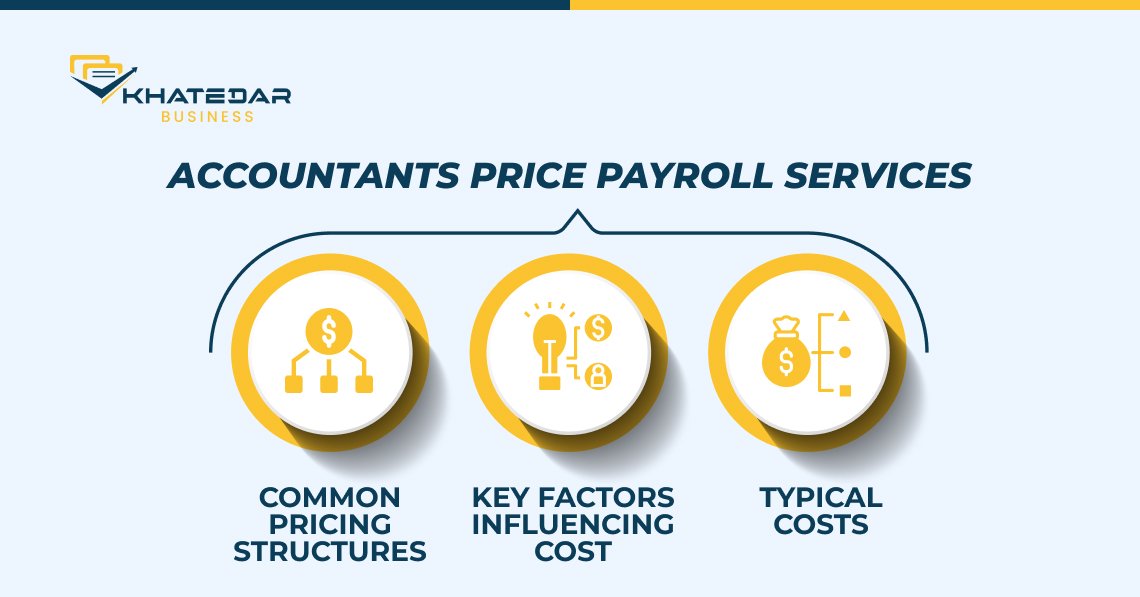
Common Pricing Structures
Monthly Retainer + Per-Employee Fee
This is one of the models that is widely used. You pay a set base fee, plus each employee will incur a small additional cost. It’s a flexible model if your business scales up or down, as your payroll cost will adjust accordingly.
Fixed Pricing
Under fixed pricing, you pay a monthly fee no matter how many employees you have. This option works well for companies that have a consistent number of employees and simple payroll needs.
Value-Based Pricing
Sometimes, the pricing is based on the value provided and the amount of responsibilities assumed by the accountant. If they do everything for you, including compliance, reporting, and giving you advice, then the price is higher.
Hourly Rates
There are also some accountants who charge by the hour. This is less common for payroll, but it can apply if your requirements are irregular or need frequent changes.
Key Factors Influencing Cost
Number of Employees
The more employees you have, the more calculations and record keeping are involved, leading directly to higher charges.
Frequency
Monthly payroll is standard. But if you need weekly or bi-weekly payroll, it requires more effort, which increases pricing.
Compliance and Tax Complexity
Accounting for PF, ESI, TDS, and other such filings increases the role of the accountant. The more complicated the compliance is, the higher the cost will be.
Level of Service
A simple payroll service (paying the employee and providing a pay slip) is less expensive. The full payroll service (compliance, filings, reports, support) is more costly.
Additional Services
Additional services such as audits, detailed reporting, or employee support will add to the price but will also add to the value provided.
Typical Costs
Basic Processing
This usually includes salary calculation and payslip generation. This option makes sense cost-wise and is the right fit for a small business with straightforward payroll needs.
Comprehensive / Full-Service
This is the all-in-one option that covers salary processing, compliance, tax filings, reporting, and continuous support. It costs more but saves you time and reduces risk.
Accountant vs Payroll Company: Which Is Best?
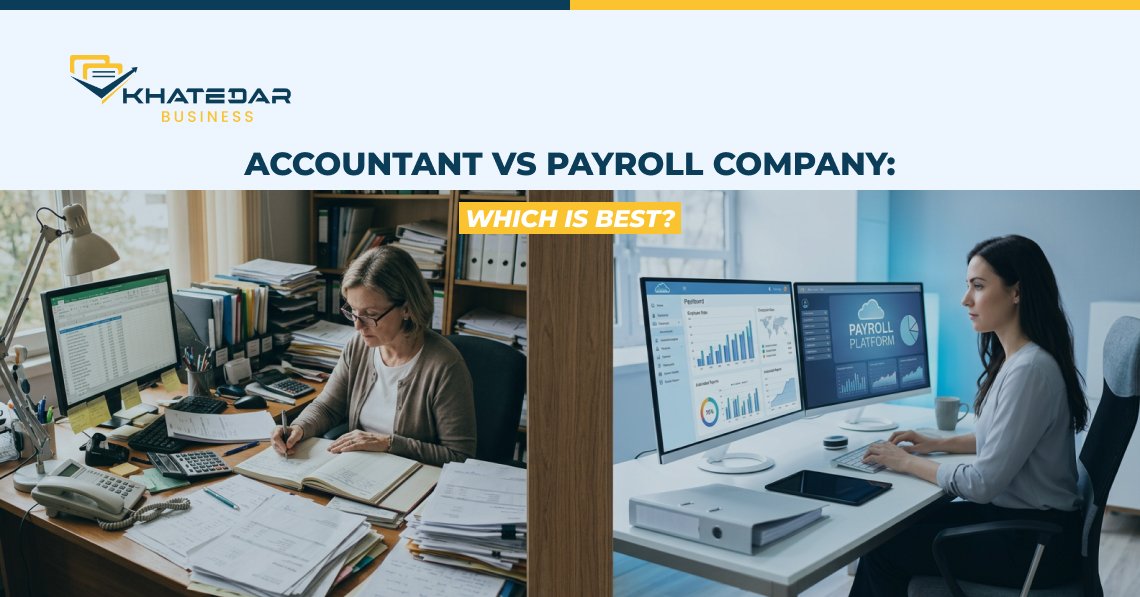
If your team is small and payroll requirements are simple, partnering with an accountant is a good option. It is cheaper, and you get direct assistance. But if you start expanding your business, you can find that keeping up with compliance, handling constant changes, and managing large amounts of employee data becomes challenging.
A payroll company, on the other hand, is for scaling. It provides automated systems, delivers greater precision, and gives you compliance support, such as PF, ESI, and TDS. This makes it a better fit for growing businesses that want less manual work and fewer errors.
But which one is right for you? An accountant is fine if your payroll remains simple. But if you want a hassle-free process, lower risks, and assistance as you scale, a payroll company or outsourcing partner would be the better choice in the long run.
Conclusion
So, how much should you really expect to pay for payroll services?
The answer depends on your business size, needs, and how complex your payroll is.
Instead of trying to do it all yourself, outsourcing payroll can be a great strategy to help you stay compliant, avoid costly mistakes, and focus more time on expanding your business.
If you’re looking for a simple, reliable, and scalable way to handle payroll, partnering with us, Khatedar Business, an appropriate outsourcing partner, can really set you apart.
See you in the next blog. Till then, try outsourcing your payroll with Khatedr Business and see how much easier it makes your work.